Sevier County Real Estate Market: Why 4 Rulebooks Matter
August 13, 2026
August 13, 2026
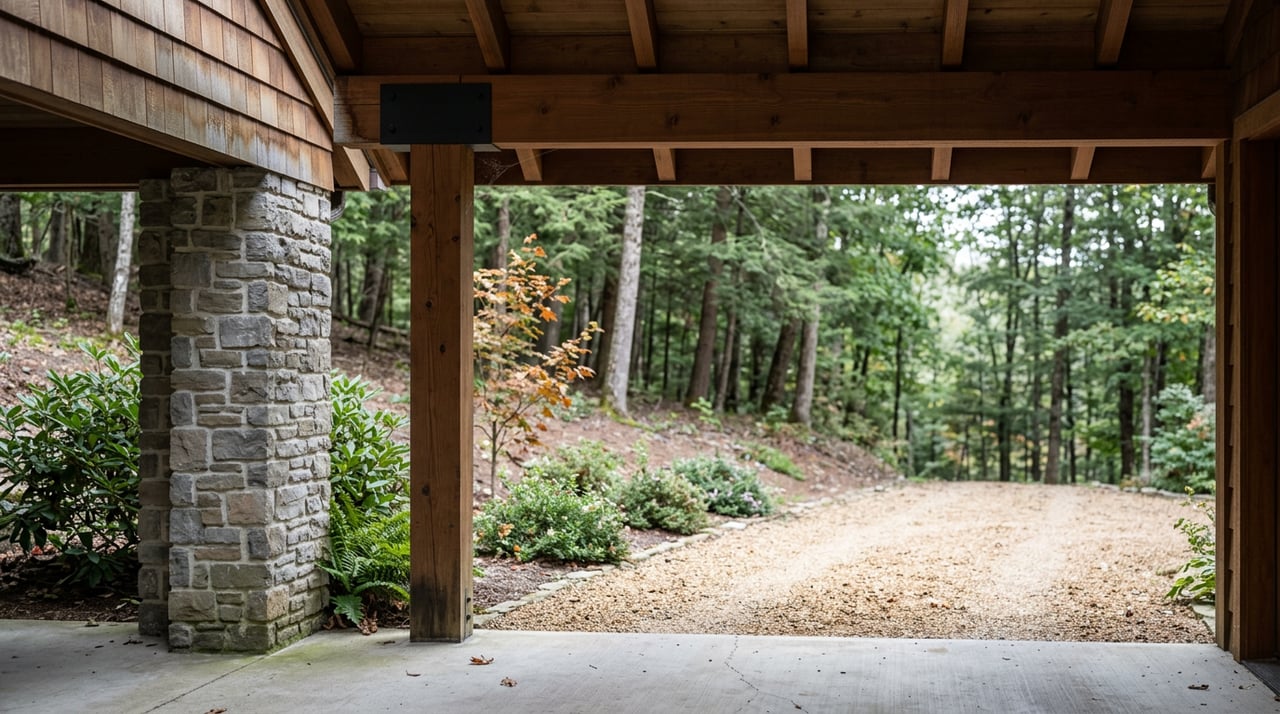
Two cabins can carry a Pigeon Forge address and still answer to completely different governments. One falls inside Pigeon Forge city limits and follows the city's short-term rental ordinance. The other sits in unincorporated Sevier County and follows a fire marshal permit program the city has nothing to do with. Nothing on the listing photos tells you which one you're looking at. Nothing on the mailing address does either.
That gap between what a listing looks like and what it's legally allowed to do is the part of the Sevier County market that median price charts never show you. And it matters more than most buyers realize, because the county's home values, its permit costs, and even how long a property sits unsold all trace back to which of four rulebooks a given parcel happens to fall under.
Sevier County contains three incorporated cities, Gatlinburg, Pigeon Forge, and Sevierville, each writing and enforcing its own short-term rental ordinance. Everything outside those city limits, including most of Wears Valley, answers instead to Sevier County government. The county only built out its own enforcement system recently: since January 1, 2024, every short-term rental in unincorporated Sevier County has needed an annual permit and inspection through the county's Fire Marshal's Office, a program run by eight full-time inspectors working assigned districts.
That means a buyer comparing a cabin in Gatlinburg to one in Wears Valley isn't just comparing two locations. They're comparing two different governments' answers to the same question: is this property allowed to be rented by the week, and under what conditions.
| Jurisdiction | Rental Registration | Typical Fee | Zoning Note |
|---|---|---|---|
| Gatlinburg | Tourist Residency Permit | $200 for up to 2 bedrooms, plus $75 per additional bedroom | Banned outright in R-1A and R-2A residential zones |
| Pigeon Forge | Short-Term Rental Unit (STRU) permit | $250 annually for units sleeping 12 or fewer | R-1 zone rentals allowed only if operating before August 13, 2018, and grandfathered in |
| Sevierville | Short-Term Rental Operational Permit | $150 initial, $50 annual renewal | Requires a fire department life-safety inspection before approval and yearly after |
| Unincorporated county (including most of Wears Valley) | County STRU permit through the Fire Marshal | $250 annually for 12 or fewer occupants, plus $25 per additional occupant | Program only two years old, enforced by eight district inspectors |
The fee differences here are almost trivial, fifty or a hundred dollars a year. The zoning differences are not. A permit fee is a line item. A zoning line is the difference between a property that can legally operate as a rental and one that can't, no matter how good the view is.
Gatlinburg's ordinance bans short-term rentals entirely in R-1A and R-2A residential zones. It doesn't matter how the property is furnished or what the previous owner did with it. If the parcel sits in one of those zones, the rental use isn't available to a new buyer.
Pigeon Forge takes a different approach with its R-1 zone. Short-term rentals there are only legal if the property was already operating as one before August 13, 2018, and the owner filed for a permit within 60 days of that ordinance passing. Anyone buying an R-1 cabin today for its rental income needs to confirm not just that a permit exists, but that it's an active, transferable grandfathered permit rather than something that lapsed years ago.
Sevierville sidesteps most of this by not writing the same kind of zone-based ban into its ordinance, which is part of why it functions less like a single market and more like two markets sharing a city limit. There's the residential side, where local buyers purchase ranch homes and bungalows to live in, and there's the cabin side, where new construction gets built specifically to chase rental income. The permit process is the same for both, but the buyer's intent behind the purchase usually is not.
Then there's the trap that catches out-of-state buyers most often: a mailing address that says Pigeon Forge or Gatlinburg doesn't guarantee the parcel is actually inside those city limits. Plenty of cabins carry a city-sounding address while sitting in unincorporated county land, which means the county's rules, not the city's, govern what happens next. The only way to know for certain is to verify the parcel against the jurisdiction's GIS mapping or call the relevant planning department directly, before writing an offer, not after closing.
Once the zoning picture is in view, the price spread across Sevier County starts to make more sense. Gatlinburg has carried the county's highest median listing prices, recently around $669,000, and part of that reflects genuine scarcity: with STRs banned outright in two residential zones, the pool of parcels where a buyer can legally run a rental shrinks, and demand concentrates on what's left.
Pigeon Forge's cabin inventory tells a related story. Because new R-1 rentals can't be created, only inherited through the 2018 grandfather window, legal STR eligibility in that zone is effectively a fixed, non-renewable resource. Cabins with an active grandfathered permit often carry a premium that has little to do with square footage and everything to do with a permit that can't be recreated on a similar lot next door.
Sevierville looks different again. As of May 2026, the average home value there sat near $418,800, down modestly from the year before, a softer number that reflects both its role as the county's everyday residential hub and a construction pipeline that hasn't hit the same zoning ceiling Pigeon Forge has. Buyers here are choosing between a primary residence and an investment cabin more than they're choosing between zoning categories.
Wears Valley and the rest of unincorporated Sevier County split the difference. Because the county doesn't carve out zones the way the cities do, cabins there have traded across a wide range, roughly $500,000 and up for existing homes, with buildable lots running anywhere from about $50,000 to $300,000 depending on acreage and septic approval. The tradeoff for that flexibility is a permit system that's only been formally enforced since 2024, which means the paperwork trail on some existing rentals is thinner than what a buyer would find in a city with decades of established ordinance history.
Zoom out to the county level and the picture gets murkier before it gets clearer. A regional housing report tracking nine East Tennessee counties found that, as of May 2026, Sevier County's absorption rate, the time it would take to sell all current inventory at the current sales pace, stood at roughly 9.29 months, the longest of any market in the group and a sharp contrast to a tight 2.66 months in nearby Farragut. In the same window, closings were actually up 5.4 percent year over year even as pending sales slipped 6.9 percent, and the median sale price held close to flat.
By July 2026, county-wide listing data showed roughly 4,116 active listings with a median asking price near $619,000 and a median 60 days on market.
That combination, rising closings alongside a stretched absorption rate, only makes sense once you factor in the zoning patchwork above. A county where legal STR inventory is capped in some zones and wide open in others doesn't behave like one market cooling or heating uniformly. It behaves like several smaller markets stacked on top of each other, some tight because supply is legally frozen, others soft because investment-grade cabins built during the boom years are still working through absorption. The county-wide average smooths all of that into a single number that describes no actual property particularly well.
For a buyer, the practical takeaway isn't that Sevier County is a buyer's market or a seller's market. It's that the answer depends entirely on which of the four rulebooks the parcel you're looking at actually falls under, and that's a question worth answering before the price becomes the thing you're negotiating over.
How do I find out whether a cabin is inside city limits or in unincorporated Sevier County? Check the parcel against the relevant jurisdiction's GIS mapping tool, or call the city or county planning office directly. A street address alone isn't reliable confirmation.
If a permit exists, does it automatically transfer to a new owner? Not always. Gatlinburg's Tourist Residency Permit is not transferable on sale and must be reapplied for. Grandfathered permits in Pigeon Forge's R-1 zone need to be confirmed as active and properly transferred, not assumed to carry over automatically.
Are the permit fees the main cost to plan for? The fees themselves are modest, generally in the $150 to $300 range depending on jurisdiction. The bigger cost to plan for is the life-safety inspection every jurisdiction requires before issuing or renewing a permit, along with any corrections an older cabin might need to pass one.
Sevier County rewards buyers who ask the jurisdiction question before they ask the price question. If you're comparing a cabin in Gatlinburg to one in Wears Valley, or trying to figure out whether a Pigeon Forge property's grandfathered permit is actually still valid, that's exactly the kind of groundwork Michele Harrill walks clients through before they write an offer. For a deeper look at the permit process itself, our guide to Sevier County STR permits breaks down the paperwork step by step. When you're ready to talk through what a specific property can and can't do, schedule a consultation and we'll start with the parcel record, not the listing photos.
Stay up to date on the latest real estate trends.
Partner with Michele Harrill for a seamless, professional real estate experience in Tennessee. With expert market knowledge, personalized guidance, and a dedication to your success, Michele ensures that buying or selling your home is stress-free and rewarding.
Get In Touch With Michele To Learn More
807B Dolly Parton Pkwy Sevierville TN 37862